

Understanding the brain's response to trauma
Explore how traumatic experiences reshape the brain, affecting fear, memory, and emotional regulation. This page explains the neural mechanisms behind PTSD, offering insights into its complex biological foundations.
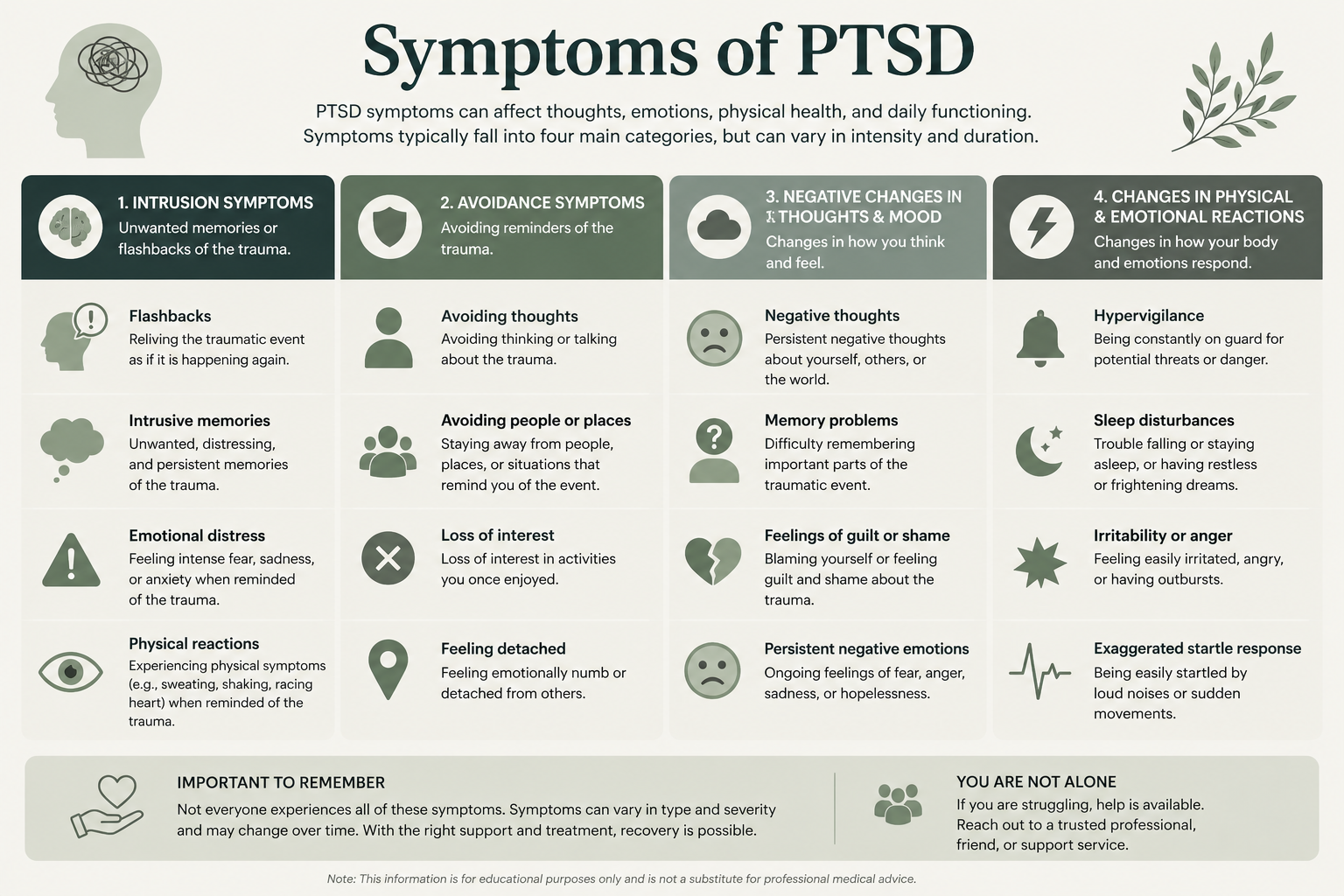
PTSD: more than an emotional reaction
Post-Traumatic Stress Disorder (PTSD) isn't just about feeling overwhelmed after a distressing event. It involves measurable changes in the brain systems responsible for processing fear, regulating emotions, forming memories, and detecting threats.
Traumatic experiences can fundamentally alter neural functioning, strengthening fear responses and contributing to persistent symptoms such as:
- hypervigilance
- flashbacks
- emotional dysregulation
- avoidance behaviours
- and many more...
Understanding these neural shifts helps us recognise PTSD as a complex biological condition, not just a personal weakness.

Key brain regions in PTSD
Three brain regions are particularly crucial in understanding how PTSD affects the brain: the amygdala, hippocampus, and prefrontal cortex.
- The amygdala acts as the brain's alarm system, detecting danger and triggering fear responses. In PTSD, the amygdala often becomes hyperactive, leading to exaggerated fear reactions and hypervigilance, such as intense fear when hearing a sudden loud noise like fireworks.
- The hippocampus is vital for memory formation, particularly contextual memory. In PTSD, its function can be impaired, leading to vivid, intrusive trauma memories (flashbacks) and difficulties distinguishing past threats from present safety. This can make it hard to feel safe even in secure environments.
- The prefrontal cortex is responsible for higher-level functions, including emotional regulation, decision-making, and suppressing inappropriate fear responses. In individuals with PTSD, there's often reduced regulation from the prefrontal cortex, making it harder to calm fear responses or manage overwhelming emotions.
These regions interact with learning and memory processes, impacting how trauma is stored and reacted to.

Learning and neural plasticity
PTSD involves several key processes that highlight the interplay between learning and neural mechanisms:
- Fear conditioning: Traumatic events can lead to classical conditioning, where neutral stimuli become associated with fear, triggering intense reactions later on.
- Memory consolidation: Traumatic memories are often highly consolidated and difficult to suppress, contributing to intrusive thoughts and flashbacks.
- Hypervigilance and stress responses: The brain remains in a heightened state of alert, maintaining a constant stress response even when no danger is present.
- Neural plasticity: The brain's ability to adapt and change can be both a challenge and an opportunity in PTSD. While trauma can wire the brain for fear, therapeutic interventions like extinction learning aim to rewire these pathways.
- Extinction learning: This process involves learning that a previously feared stimulus is now safe. In PTSD, the ability to engage in extinction learning can be impaired, making it harder to overcome fear responses.
These processes demonstrate how PTSD is not just an emotional response, but a condition deeply rooted in the complex interactions between our neural systems, behaviour, and learning experiences.
Fostering understanding and empathy
By understanding the neural mechanisms of PTSD, you can gain a clearer perspective on how trauma affects the brain, behaviour, memory, and emotional responses. This knowledge helps to demystify PTSD, showing it as a disorder with tangible biological foundations rather than merely a personal weakness or exaggerated reaction. It fosters greater empathy and reduces the stigma surrounding trauma-related conditions, empowering you to better support those affected and appreciate the complexity of their experiences.
Create Your Own Website With Webador